
52 Weeks: Lie Still
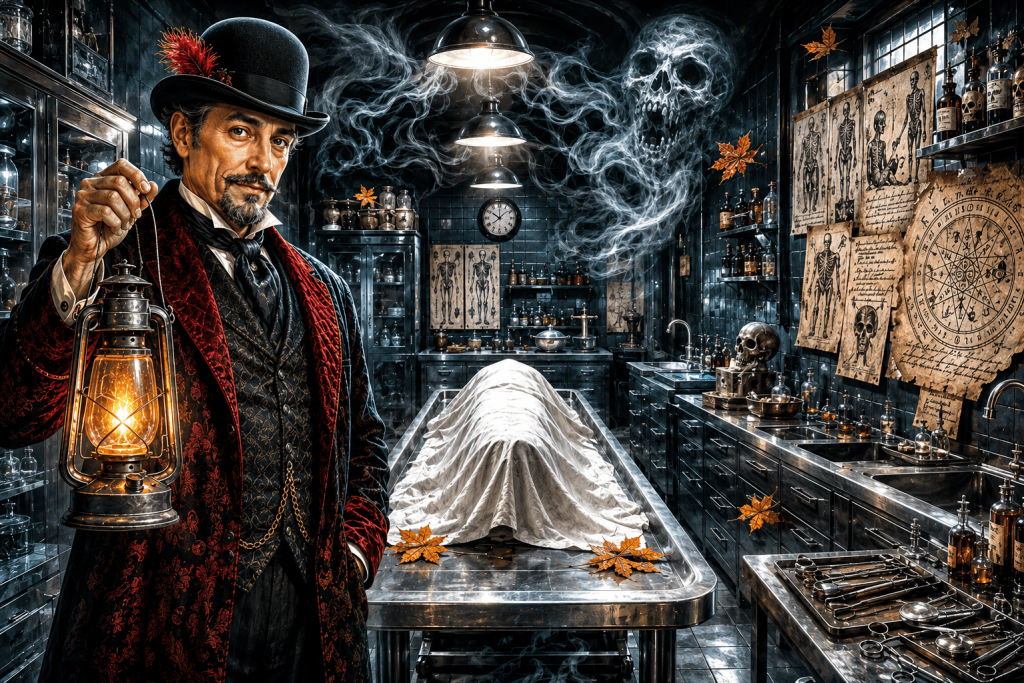
The Autopsy of Jane Doe (2016)
★★★★★★★★☆☆ (8 out of 10 stars)
Director: André Øvredal
Producer: Fred Berger, Eric Garcia, Ben Pugh, Rory Aitken
Starring: Brian Cox, Emile Hirsch, Olwen Catherine Kelly
“Open up and let me in.” – Tommy Tilden
The Review:
My dearest Dilettantes of the decidedly dismal and deliciously doom-laden tales of fright, I give to you my opinions and insights on a quietly understated story; an unfolding discovery of doom in a journey without end that never leaves its singularly grotesque starting line. The unbalancing and unfolding tale of The Autopsy of Jane Doe.
It would be much too easy to slip while crossing my own words and spill too much of the plot, so I shall refrain from that risk and concentrate instead upon some of the technical and theatrical aspects of this mournful little marvel.
I will offer this, however: this film is wonderfully claustrophobic. As the tale progresses, the audience is drawn ever deeper into a labyrinth of flesh, bone, secrets, and dread. I eventually felt pressed not only into the flesh-chilling details of this fable, but truly confined within the tiny spaces where the story advances with suffocating mysteries and a mounting sense of inevitability. The walls seem to inch inward. The lighting grows more oppressive. Every corridor feels narrower than the one before. By the final act, one is no longer merely watching the film but occupying the same dreadful chamber as its unfortunate protagonists.
What makes The Autopsy of Jane Doe so effective is its remarkable restraint. Rather than relying on excessive spectacle, it trusts atmosphere, pacing, and the creeping unease of unanswered questions. Director André Øvredal exhibits a meticulous hand, allowing each revelation to emerge with surgical precision. Much like the examination at the center of the film, layer after layer is peeled back, and each discovery proves more unsettling than the last.
The performances are equally commendable. Brian Cox and Emile Hirsch share a natural chemistry that lends authenticity to their father-son relationship. Their conversations ground the increasingly bizarre events in an emotional reality that makes the horror far more effective. When fear finally takes hold, it feels earned rather than manufactured.
Visually, the picture is a study in elegant confinement. The morgue itself becomes a character, cold and oppressive, illuminated by fluorescent glare, emergency lighting, and deep shadows that seem to conceal more than darkness. The cinematography understands the value of stillness, allowing the audience’s imagination to labor in dreadful partnership with the images on the screen.
Its greatest strength, however, lies in the peculiar territory it inhabits. It sits disquietly in a narrow crevasse between cosmic horror and folk horror. Ancient fears and unknowable forces mingle with folklore and superstition, creating a mystery that fascinates as much as it horrifies. It has been several years since I first watched this film, yet many of its revelations remain vividly preserved in my memory, a testament to the power of its storytelling.
Yes, dear friends, I did like this one. Quite a bit, in fact.
The Autopsy of Jane Doe is not a bombastic carnival ride of blood and thunder. Instead, it is a slow tightening noose woven from suspense, mystery, and mounting dread. It is the sort of horror film that whispers rather than screams, and in doing so proves far more unsettling than many louder productions.
For those who appreciate stories where every answer births a fresh question and where doom patiently reveals itself beneath a scalpel’s edge, I can readily recommend an appointment with this most peculiar cadaver.
Sleep well, my Dilettantes… and should a nameless Jane Doe arrive at your local morgue, perhaps leave the examination to someone else.
Yes child, there is more…so much more. See what you have missed: T. Glenn Bane’s 52 Weeks of Halloween Index.
I loved this movie too. I suddenly feel compelled to watch it again.