
Tactical Tuesdays: Better Missions is Key
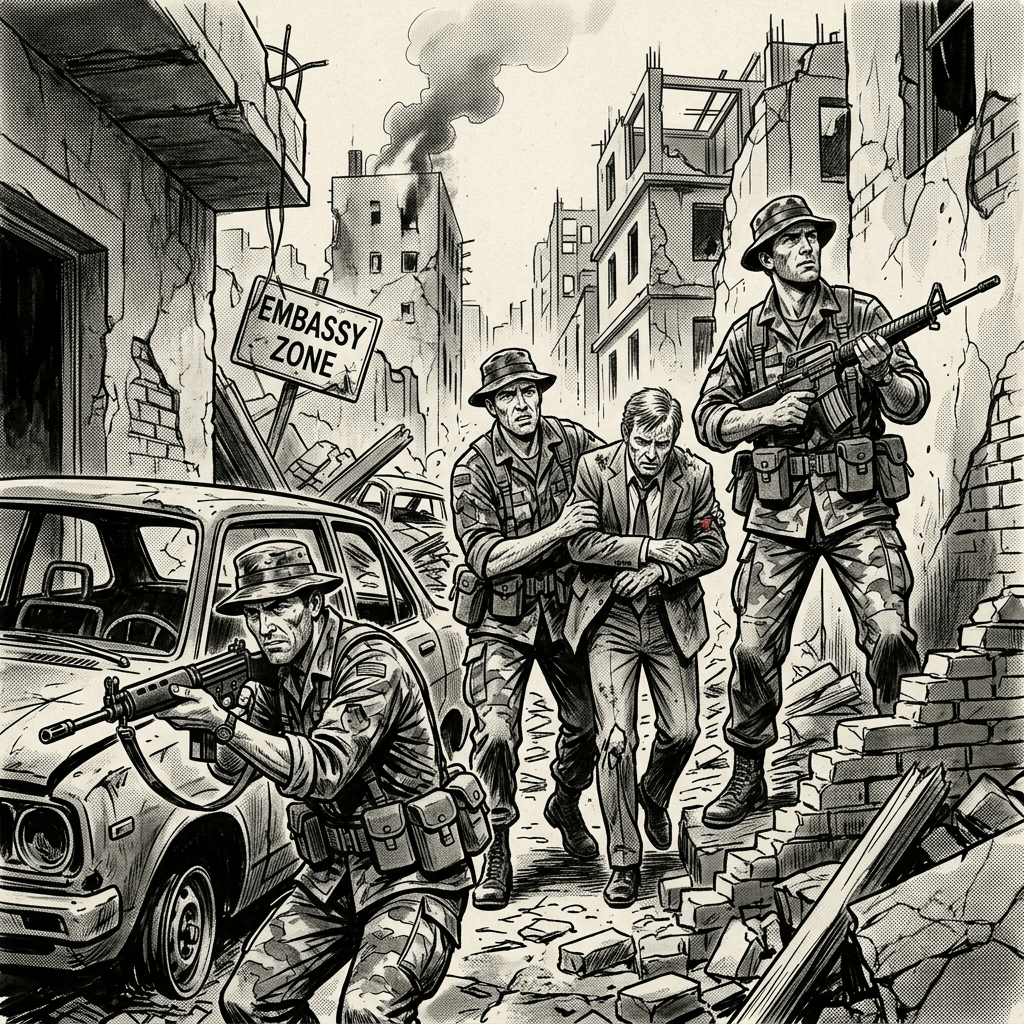
Mission First, Firefight Second
There is a moment in nearly every bad action movie when the heroes kick open a door, spray bullets across the room, and somehow walk away convinced they’ve accomplished something important. The walls are riddled with holes. The bad guys are down. Cue the triumphant music.
Mission accomplished?
Not even close.
One of the easiest mistakes a Game Master can make is confusing action with progress. They aren’t the same thing. In Black Dogs, the firefight isn’t the story. It’s the interruption. The mission is what matters.
If your players remember nothing except how many enemies they eliminated, something has gone terribly wrong.
Every Mission Begins with a Problem
Military professionals don’t wake up in the morning hoping to get into a gunfight. They have jobs to do.
Recover stolen intelligence.
Extract a scientist before the enemy arrives.
Escort a diplomat through hostile territory.
Prevent an assassination.
Stop a biological weapon from reaching the black market.
None of those objectives say, “Kill everyone you see.”
That’s because professionals understand something Hollywood often forgets: combat is expensive.
Every shot fired announces your position.
Every explosion changes the battlefield.
Every casualty creates political consequences.
Sometimes the fastest way to lose the mission is to win the firefight.
Bullets Don’t Solve Every Problem
Imagine your team finally corners the architect of an international terrorist network.
He’s alive.
He’s trapped.
Then your radio crackles.
A school bus has been hijacked three blocks away.
You have time to stop one crisis.
Not both.
That’s the kind of decision Black Dogs is built to create.
Nobody at the table will remember that firefight where they rolled well and cleared another warehouse.
They’ll remember the night they had to choose between saving innocent lives or capturing the man responsible for a hundred deaths.
Those are the decisions that become campaign legends.
Every Trigger Pull Has a Price
Hollywood treats ammunition like confetti.
Reality—and good pulp—doesn’t.
Violence has consequences.
Maybe the explosion destroys the evidence you needed.
Maybe the witness dies before revealing the conspiracy.
Maybe frightened civilians mistake you for the enemy.
Maybe international news cameras capture the entire operation.
Maybe your actions start a diplomatic crisis that will haunt the next six adventures.
Suddenly that “easy” solution doesn’t seem so easy anymore.
That’s exactly where you want your players.
The Best Missions Make Every Option Hurt
A memorable operation doesn’t ask players to find the correct answer.
It asks them to choose the least terrible one.
The bridge can be destroyed—but refugees are still crossing it.
The scientist can be rescued—but doing so exposes your undercover operative.
The virus can be contained—but only if the quarantine remains sealed with innocent people still inside.
The conspiracy can be exposed—but the whistleblower won’t survive the fallout.
Now your players aren’t simply managing hit points.
They’re making command decisions.
That’s the difference between a tactical game and an unforgettable one.
Small Decisions Win Wars
One of Black Dogs’ defining themes is that history often pivots on moments nobody notices.
A frightened child guided to safety.
A civilian spared instead of threatened.
An enemy officer captured instead of executed.
A damaged bridge repaired instead of destroyed.
A village defended that never appears on any map.
None of those actions make newspaper headlines.
All of them can change the course of a campaign.
The greatest victories rarely begin with spectacular explosions.
They begin with ordinary people deciding to do the difficult thing.
Design Objectives, Not Encounters
When planning an operation, don’t start by asking how many enemies occupy the compound.
Ask what success actually looks like.
Can the mission still succeed if nobody dies?
Can it still fail after every enemy has been defeated?
If the answer to both questions is yes, you’ve probably designed a strong scenario.
The opposition isn’t the adventure.
It’s the obstacle.
The objective is the adventure.
Make Players Think Like Operators
Good missions force priorities.
Protect the civilians.
Secure the evidence.
Recover the prototype.
Keep the diplomat alive.
Prevent the reactor meltdown.
Everything else is secondary.
That doesn’t make combat less exciting.
It makes combat meaningful.
When the shooting finally starts, every round fired represents a plan falling apart.
That’s tension.
That’s drama.
That’s pulp.
Final Orders
The greatest military stories were never about counting bodies.
They were about impossible missions carried out by determined people who understood that success wasn’t measured by the number of enemies left behind—it was measured by the lives they saved, the disasters they prevented, and the hope they preserved.
That’s the beating heart of Black Dogs.
The firefight may be the scene everyone talks about around the table.
But the mission?
That’s the story they’ll remember years from now.
If you would like to revisit past articles, look no further than the Geek Opera Index!
Watch the shadows, my friends. And always check your ale for poison.