
Frights & Fables: The Lady Sinclaire Affair
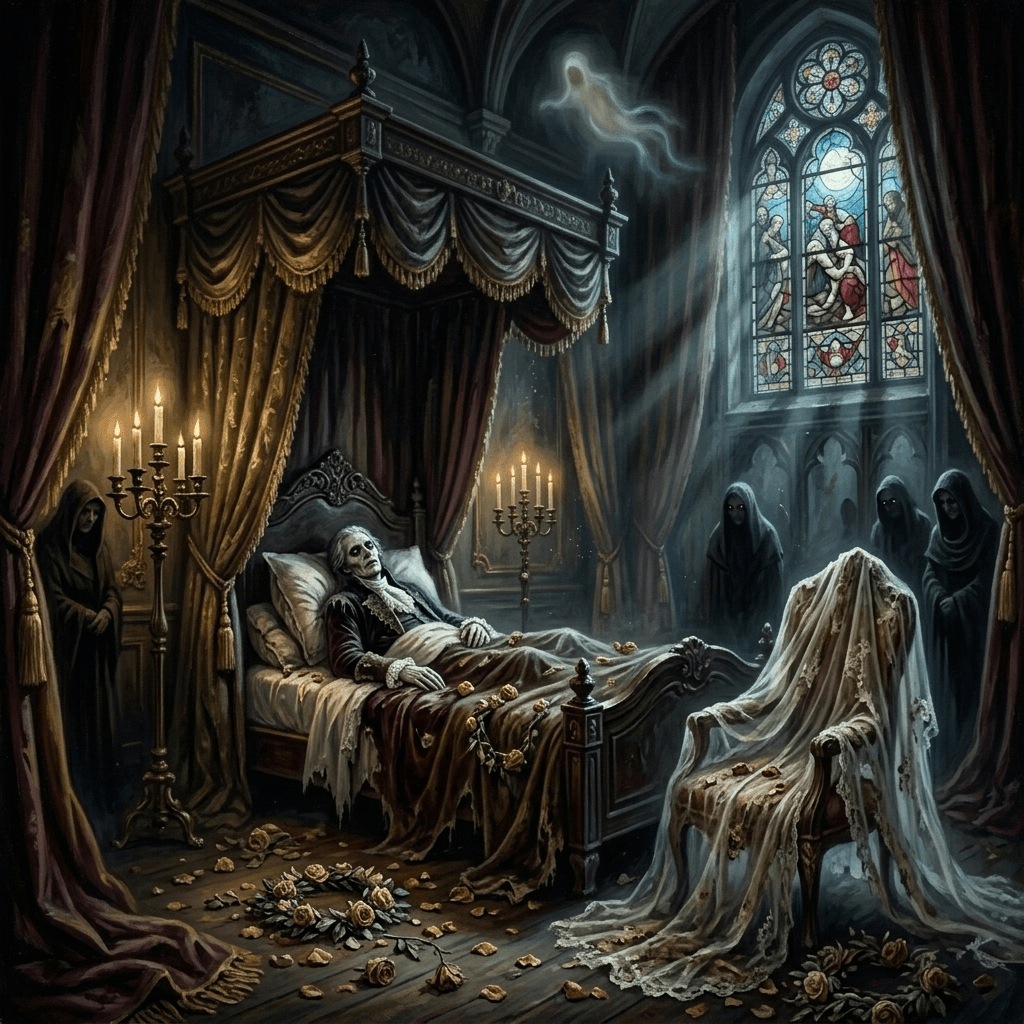
The Lady Sinclaire Affair
A System-Agnostic Gothic Horror Adventure for One Night of Play
About This Adventure
This one-night scenario draws its bones from the Rules of Gothic Horror found in Bare Bones Multiverse by T. Glenn Bane, published by Scaldcrow Games. Though Bare Bones Multiverse is no longer in print, it served as the foundation for Worlds of Pulp™, and its guidance on terror, atmosphere, and gothic storytelling still shapes tales like this one.
You can run The Lady Sinclaire Affair with any ruleset you like. Nothing here leans on a particular system’s dice or stat blocks. Instead, you’ll find atmosphere, locations, NPCs, clues, and encounter hooks — everything you need to guide your players from light into shadow over the course of a single evening.
A note on tone: As Ann Radcliffe (1764–1823) taught us, terror is the unrelenting dread that comes before the horrifying moment, while horror is the revulsion that follows once the awful truth is seen. Lean on terror. Let it stretch. Save the horror for when it lands hardest.
The Premise (GM Overview)
On a beautiful spring morning, villagers from across the countryside gather at the abbey for the wedding of Count Mezkah to the entrancing and beloved Lady Sinclaire. Everything glows with comfort and joy — flowers, music, the promise of a happy union.
Then something goes dreadfully wrong.
The ceremony is cancelled when the priest collapses with sudden illness. Moments later, the abbey groundskeeper discovers a body in the graveyard. The player characters, respected travelers or returning locals, are asked to investigate.
The hidden truth: The real Lady Sinclaire was taken by a secret order of hooded cultists who hold to a dark and forbidden faith. Through a terrible ritual, they replaced her with a creature wearing her face — a thing that now whispers control into the Count from inside his own manor. The body in the graveyard is the last soul who saw too much. If the heroes fail, the Count’s madness will spill out and devastate the countryside.
The party must uncover the deception, break the cult’s hold, breach the manor, and confront the false Lady Sinclaire before dawn.
Running the Dread: GM Notes on Atmosphere
The gothic magic of this scenario lives in contrast. Follow the core principle from Bane’s rules: paint a backdrop of comfort and joy, then mar it with something wrong.
- Start warm. Open on the wedding’s beauty — the perfume of spring flowers, laughter, gleaming vestments. Let players relax.
- Introduce the wrongness slowly. A single off note. A servant who won’t meet anyone’s eyes. A smell of rot beneath the roses.
- Move from light to shadow. As the investigation deepens, evidence should feel first unnatural, then unclean, then unmistakably supernatural. Each step pulls the heroes further from the safe world they knew.
- Make them outcasts. The villagers, gripped by superstition, will refuse to believe wild claims. Doors close. Old friends turn cold. This isolation is a feature, not a bug.
- Let the evil watch. The false Lady Sinclaire becomes aware of the investigators early, but she never strikes directly. She works through servants, illness, illusion, and dread — a spider tugging distant threads.
Building terror at the table: When the mood grows tense — the first time a player voices real concern, in or out of character — pause. Describe the silence. Let dread accumulate. You don’t need dice to make a room hold its breath.
Pepper the environment with Gothic and Gothic Revival architecture: cathedral spires, iron gates, crumbling abbey walls, statues worn faceless by time. Ruins and decay should whisper of dark events long past.
The Cast: Victorian & Edwardian NPCs
Populate the night with the classic figures of gothic fiction.
Count Mezkah — The tyrant-in-waiting. Once a gracious noble, now bedridden and raving. His servants fear he will perish, or worse, recover into something cruel. In his fever he makes sadistic declarations that terrify the household.
“Lady Sinclaire” — The persecuted maiden’s stolen face, now worn by the creature. Beautiful, magnetic, and utterly wrong beneath the surface. She has secluded herself in the manor since the ceremony’s collapse. She is charming, seductive, and patient.
Father Aldous — The priest who fell ill at the altar. Bedridden and weak, he holds a fragment of the truth but fears no one will believe him. A scholar of old faiths, he may become the party’s only ally.
Brother Corwin — A hooded monk of the dark order, hiding in plain sight among the abbey’s clergy. Watchful, soft-spoken, dangerous. One of several.
Miss Havlock — A nervous nurse tending the Count. She has seen things in the manor’s halls she cannot explain and dares not repeat.
Old Barrow — The abbey groundskeeper who found the body. Superstitious, half-drunk, and more observant than anyone credits.
The Dead Woman — A young maidservant, strangled and thrown from the abbey’s highest spire. She bears a striking resemblance to Lady Sinclaire. She discovered the swap and paid for it.
Act 1: The Call to Adventure
Scene: The Cancelled Wedding
Open on beauty. The abbey courtyard blooms with spring color. Guests murmur in their finery. Then Father Aldous staggers at the altar and collapses, and the ceremony grinds to a halt. Confusion ripples through the crowd. Lady Sinclaire withdraws at once, hurried into a waiting carriage and back to the Count’s manor.
Before the crowd disperses, Old Barrow comes running from the graveyard, pale and stammering. He has found a body.
The Hook: As respected travelers (or locals newly returned), the characters are asked to look into the matter — quietly, before panic spreads. Remember Bane’s guidance: gothic heroes are often outsiders, drawn into a world that will soon reject them.
Key Location — The Abbey Graveyard
Crumbling headstones, a leaning iron fence, the great spire looming overhead. The body lies broken among the graves.
Key Clues:
- The young woman was strangled first, then thrown from the spire — the fall didn’t kill her.
- Her face bears a striking resemblance to Lady Sinclaire.
- Clutched in her hand: a torn scrap of dark cloth, coarse and hooded-robe rough.
- Faint drag marks lead from the spire’s base toward the abbey’s inner cloister.
GM Note: This is the first crack in the comfort. Play the discovery straight and unsettling. Let one detail — the resemblance — hang in the air unspoken until a player names it.
Act 2: The Journey and Conflict
The investigation deepens, and the world grows colder. This act is about mounting dread and the slow slide from light into shadow.
Scene: The Village Turns Away
When the heroes begin asking hard questions, the villagers recoil. Superstition seals lips. Those who know something are too frightened to speak. The characters find themselves increasingly alone — exactly as gothic protagonists should.
Key Location — Father Aldous’s Sickroom
The priest recovers enough to speak in fragments. He collapsed not from illness but from seeing something at the altar — the bride’s reflection in the ceremonial silver did not match her face. He speaks of an old order thought long dead, monks who trade souls for power. He begs the heroes to be careful. He may not survive the night.
Key Clues:
- The bride “cast no true reflection.”
- The dark order once operated from beneath the abbey itself.
- The Count’s sudden decline began the very hour Lady Sinclaire returned to the manor.
Key Location — The Abbey Undercroft
Following the drag marks and Aldous’s warning leads below the abbey. Here the Gothic decay turns sinister: guttering candles, ritual markings scratched into old stone, the coarse hooded robes of Brother Corwin and his order.
Encounter Hook — The Hooded Order: The monks would rather the heroes never leave. This can play as a tense confrontation, a chase through collapsing tunnels, or a desperate escape. Whatever form it takes, the cult should feel like they are protecting something far worse than themselves.
Key Clues in the Undercroft:
- Evidence of a replacement ritual — a summoning circle, a discarded bridal veil, scorched offerings.
- Records naming the dead maidservant, who “learned the secret.”
- A crude map or key pointing the way to the Count’s manor.
GM Note — The Watching Evil: By now, the false Lady Sinclaire knows the heroes are close. She sends warnings, not attacks: a servant’s whispered threat, a dead bird on a doorstep, the Count’s ravings suddenly repeating a character’s own name. Never let her strike directly yet. Terror thrives on anticipation.
Act 3: Climax and Resolution
Key Location — The Count’s Manor
A grand Gothic Revival house gone wrong. Once warm, now cold and shadowed. Servants creep the halls in fear. Miss Havlock may help the heroes slip inside, or beg them to flee. From somewhere above come the Count’s tortured ravings.
Scene: The Sickroom of the Count
Count Mezkah lies wasting in his bed, mind shattered, spewing cruel declarations. He is not the villain — he is a victim, a puppet. Freeing him means severing the creature’s hold. His condition is the ticking clock: if the heroes delay, his madness breaks loose upon the countryside.
Scene: The Confrontation
At last, the heroes find “Lady Sinclaire.” This is the moment of horror — the shift from terror’s dread into revulsion as her beautiful mask slips and the truth beneath is revealed. Save your most vivid, unsettling description for this reveal. Let it land.
Encounter Hook — The False Lady: She is cunning before she is violent. She may try seduction, bargaining, or turning the heroes against one another before any confrontation turns physical. Defeating her is not only a fight — it may require the heroes to expose her, break the ritual binding her, or destroy the object anchoring her to this world. Give your players room to be clever.
Resolution:
- If the heroes prevail: The creature is banished, the Count wakes from his fever, and the true horror recedes. But gothic victories are rarely clean. Perhaps Lady Sinclaire’s real fate is never fully known. Perhaps one hooded monk slipped away. Perhaps the villagers still whisper and refuse to speak of that spring. The heroes achieve their aim — defeat evil, restore order, and win a measure of vindication — yet carry the shadow with them.
- If they fail: The Count’s madness spills across the land, and the order’s dark work spreads. A grim hook for another night.
GM Note: Match the gothic story objective — to awaken horror and wonder in your players. The goal isn’t just to win. It’s to make them feel the descent, the dread, and the terrible beauty of the unknown.
Quick Reference for the GM
The Three Beats of Dread
- Comfort — the wedding, the spring morning, the warmth.
- Wrongness — the body, the resemblance, the reflection that lies.
- Shadow — the cult, the manor, the creature behind the mask.
Recurring Threads to Seed Early
- Reflections that don’t match.
- The dead maid’s resemblance to the bride.
- The Count’s decline timed to the bride’s return.
- Hooded figures glimpsed at the edges of scenes.
Pacing for One Night
- Act 1: roughly the first fifth of your session — discovery and the hook.
- Act 2: the long middle — investigation, isolation, the undercroft.
- Act 3: the final stretch — the manor, the reveal, the confrontation.
A Final Word
Gothic horror endures because it understands a simple truth: what we imagine in the dark is worse than what we see in the light. Lean into terror. Let the dread build. And when the mask finally slips, make the horror unforgettable.
This adventure stands on the shoulders of T. Glenn Bane’s work in Bare Bones Multiverse by Scaldcrow Games — the out-of-print foundation that gave rise to Worlds of Pulp™. If tales like The Lady Sinclaire Affair stir something in you, gather your table, dim the lights, and set your heroes loose in the shadows. The night is waiting.
Breathe child. That’s right. There are more macabre revelations to come, but in the meantime, lean into our blog index and enjoy past perilous presentations. GeekOpera Index.