
Tactical Tuesdays: The Last Fare
Tactical Tuesday: Buses and Subway Cars
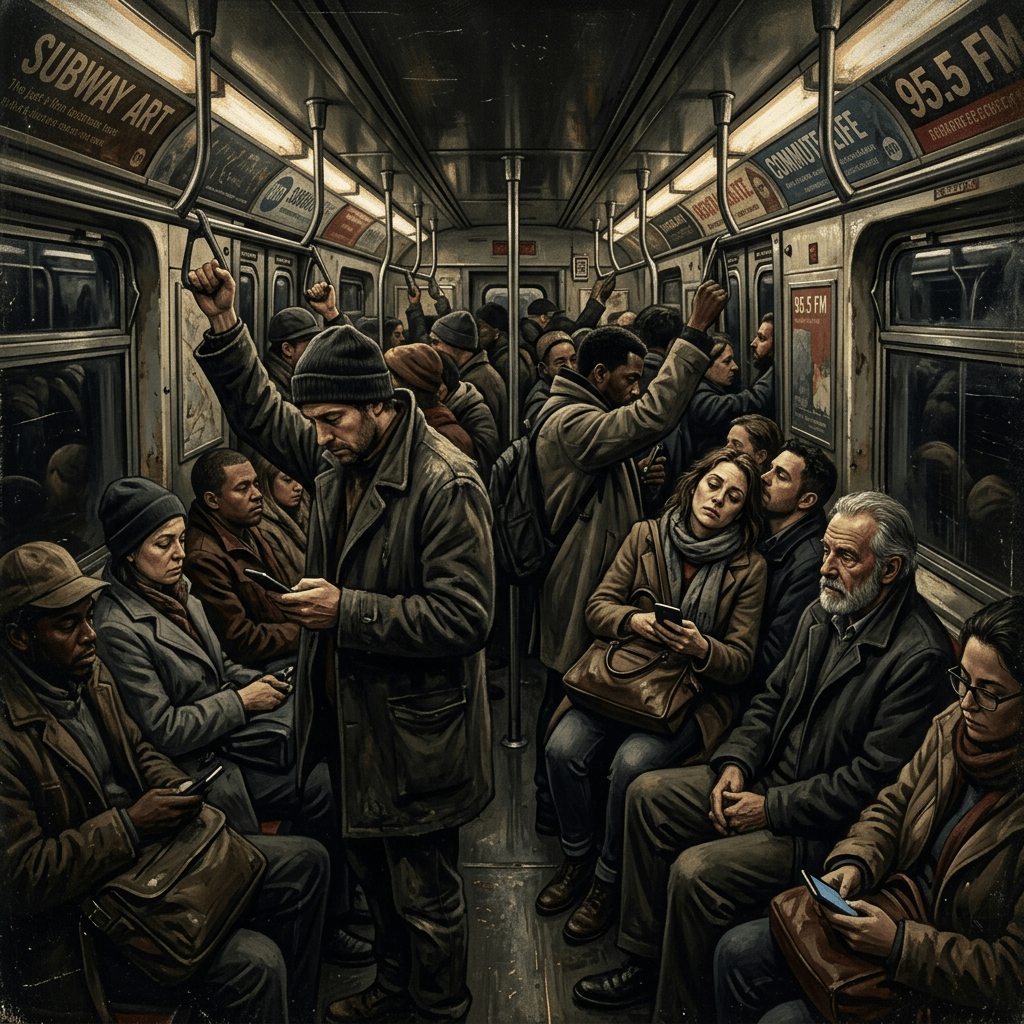
Step onto any city bus or subway car and you enter a strange little society. Strangers press shoulder to shoulder, each locked in a private world, all bound for somewhere they’d rather already be. Someone stares out a rain-streaked window. Someone else pretends to read a paper while watching the door. A tired mother rocks a sleeping child. A businessman grips a briefcase a little too tightly. Nobody speaks. Everybody notices.
That silence is the whole point. Public transit throws unrelated people into a sealed metal box, hands them a shared destination, and dares them to ignore one another. It’s intimate and anonymous at the same time — and that contradiction is pure pulp fuel.
Pulp has never been about chosen ones or gods walking the earth. It’s about ordinary people doing extraordinary things when the moment demands it. The dockworker who throws the first punch. The clerk who spots the forged ticket. The bus, the subway car, the crowded platform — these are exactly the places where everyday folks collide with danger and become heroes. Today we make that box of strangers work for you.
In this article, you’ll learn:
- Why a bus or subway car is a stronger scene location than most GMs assume
- A quick way to determine how crowded the ride is
- Three linked 2d6 tables to build a single memorable traveler
- Why you only need two or three riders to sell the whole scene
Why the Transit Car Works
A moving vehicle is a scene with a built-in clock. It starts, it stops, and between those stops nobody gets off. That’s a pressure cooker. Whatever happens on board has to resolve before the doors open again, and every character in the car is trapped in it together — including your players.
Compare that to a wide-open street, where players can scatter, flee, or simply walk away from a problem. A bus takes those options off the table. The confined space forces interaction. A pickpocket can’t vanish into an alley. A witness can’t slip out a side door. A threat can’t be avoided by crossing the road. Everyone shares the same twenty feet of rattling floor until the next stop.
Add the crowd, and you’ve got texture. A car full of strangers gives your players cover, complications, and an audience. Do they draw a weapon with civilians packed around them? Do they chase the mark and leave innocents behind? The bystanders raise the stakes without you saying a word.
The takeaway: a transit car is a locked room that moves. Use the walls.
How Crowded Is the Ride?
Before you populate the car, decide how full it is. Density changes everything — a near-empty midnight bus feels nothing like a rush-hour crush. Here’s a fast method: roll 2d6 and read the result as the mood of the ride.
- 2–3 — Nearly empty. A handful of riders, each easy to notice. Every face stands out, and so do your players. No hiding here.
- 4–6 — Light. Scattered passengers, plenty of open seats. Room to move, but witnesses everywhere.
- 7–9 — Steady. A normal working crowd. Some standing, some seated, a comfortable murmur of noise to talk under.
- 10–11 — Packed. Standing room only, bodies swaying with every turn. Easy to lose a tail, hard to swing a fist.
- 12 — Crush. Shoulder to shoulder, barely room to breathe. Anonymous, chaotic, and perfect for a lifted wallet or a hidden blade.
That single roll tells you how much cover, chaos, and elbow room the scene offers. Everything else builds on top of it.
Building a Single Traveler
Below are three 2d6 tables meant to be rolled together. Roll once on each and read the results as one person: who they appear to be, what they’re really about, and what role they play in the scene. The combination is where the magic lives. A weary nurse (Table 1) who’s fleeing a bad debt (Table 2) and turns out to be an unexpected ally (Table 3) plays worlds apart from a smiling salesman who’s shadowing the party as a threat.
Table 1 — Who They Appear to Be (Roll 2d6)
| 2d6 | The Face They Wear |
|---|---|
| 2 | A rumpled office worker, briefcase on their knees, eyes half-closed. |
| 3 | A tired nurse or laborer still in the day’s uniform, worn out and quiet. |
| 4 | A student buried in a book, bag stuffed with papers and crumbs. |
| 5 | An elderly rider clutching a shopping bag, watching everyone with mild interest. |
| 6 | A parent wrangling a restless child, distracted and frazzled. |
| 7 | A well-dressed traveler who seems slightly out of place on this route. |
| 8 | A young tough in a leather jacket, taking up more room than they need. |
| 9 | A street preacher, musician, or talker filling the silence with noise. |
| 10 | A drifter in layered coats, belongings bundled tight against their chest. |
| 11 | A uniformed figure — cop, conductor, soldier — projecting quiet authority. |
| 12 | A striking stranger everyone else is trying very hard not to stare at. |
Table 2 — What They’re Really About (Roll 2d6)
| 2d6 | The Truth Underneath |
|---|---|
| 2 | Exactly what they seem. Just a person going home. No secret at all. |
| 3 | Running from something — a debt, a person, a mistake left behind. |
| 4 | Carrying something they shouldn’t: contraband, a weapon, a stolen item. |
| 5 | Watching another passenger, waiting for a stop or a signal. |
| 6 | Nursing a private grief or fear that makes them jumpy and fragile. |
| 7 | Working an angle — a small grift, a lifted wallet, a con in motion. |
| 8 | Knows something about the party’s case, though they don’t realize it yet. |
| 9 | Tailing the players specifically, quietly and carefully. |
| 10 | Deep in a crisis of their own, one bad moment from breaking down. |
| 11 | Far more capable than they look — trained, armed, or connected. |
| 12 | The very person the players have been hunting, hiding in plain sight. |
Table 3 — Their Role in the Scene (Roll 2d6)
| 2d6 | What They Bring to the Table |
|---|---|
| 2 | Pure bystander. Background flavor, nothing more — unless the players push. |
| 3 | A witness who saw the thing the players need to know about. |
| 4 | An obstacle: loud, nosy, or in the way at the worst possible time. |
| 5 | A source of information, if the players earn a little trust. |
| 6 | A civilian in danger the moment things go loud — a hostage waiting to happen. |
| 7 | A wild card who reacts unpredictably to whatever the players do. |
| 8 | A minor threat: a pickpocket, a bully, a troublemaker testing the water. |
| 9 | A hidden threat, ready to strike or signal others when the moment comes. |
| 10 | An unexpected ally who steps in when the players least expect help. |
| 11 | A catalyst whose small action kicks the whole scene into motion. |
| 12 | The turning point of the encounter — save them, stop them, or follow them. |
Two or Three Is Plenty
Here’s the part that saves your prep: you do not need to know every rider on the bus. A full manifest is wasted effort. Roll up two or three travelers, sketch them in a sentence each, and let the rest of the crowd stay a blur of coats and faces. That’s how real transit feels anyway — a few people snap into focus while everyone else fades into background noise.
Those two or three do all the work. One gives the scene its mood. One gives the players someone to talk to, watch, or worry about. And one, if you’re lucky, becomes the hinge the whole encounter turns on. Roll a packed rush-hour car (density 11), a young tough who’s actually tailing the party (Tables 1 and 2), cast as a hidden threat (Table 3), and you’ve got a slow-burn scene ready to snap the instant the doors close.
Here’s your next step. Before your next city session, roll up three transit riders and jot them on an index card. When your players board a bus or drop into a subway car, deal them out one at a time. The scene will breathe with strangers who each carry a hint of a story, and your players will start wondering which quiet face is about to change everything.
At Scaldcrow Games, turning a routine ride into a scene your players can’t shake is exactly what we love to do. Roll up a carful of strangers, ring the bell, and let the next stop bring trouble.
If you would like to revisit past articles, look no further than the Geek Opera Index!
Duck the Alley Apples!