
Mazes & Mondays: Most Terrifying Monster
Strange Perspectives: Past 2 of 4
Part Two: Why the Most Terrifying Monster in Sundrah Might Be a Bureaucrat
The Dark Fantasy of Sundrah is anything before humor…and that’s what demands it.
One of my favorite villains I ever ran wasn’t a demon. That’s probably disappointing, especially since I had spent several weeks building the demon.
The thing had a title six words long. It lived in a fortress carved into a mountain. It had an army. It had prophecies. It had custom artwork and the players killed it in twenty minutes.
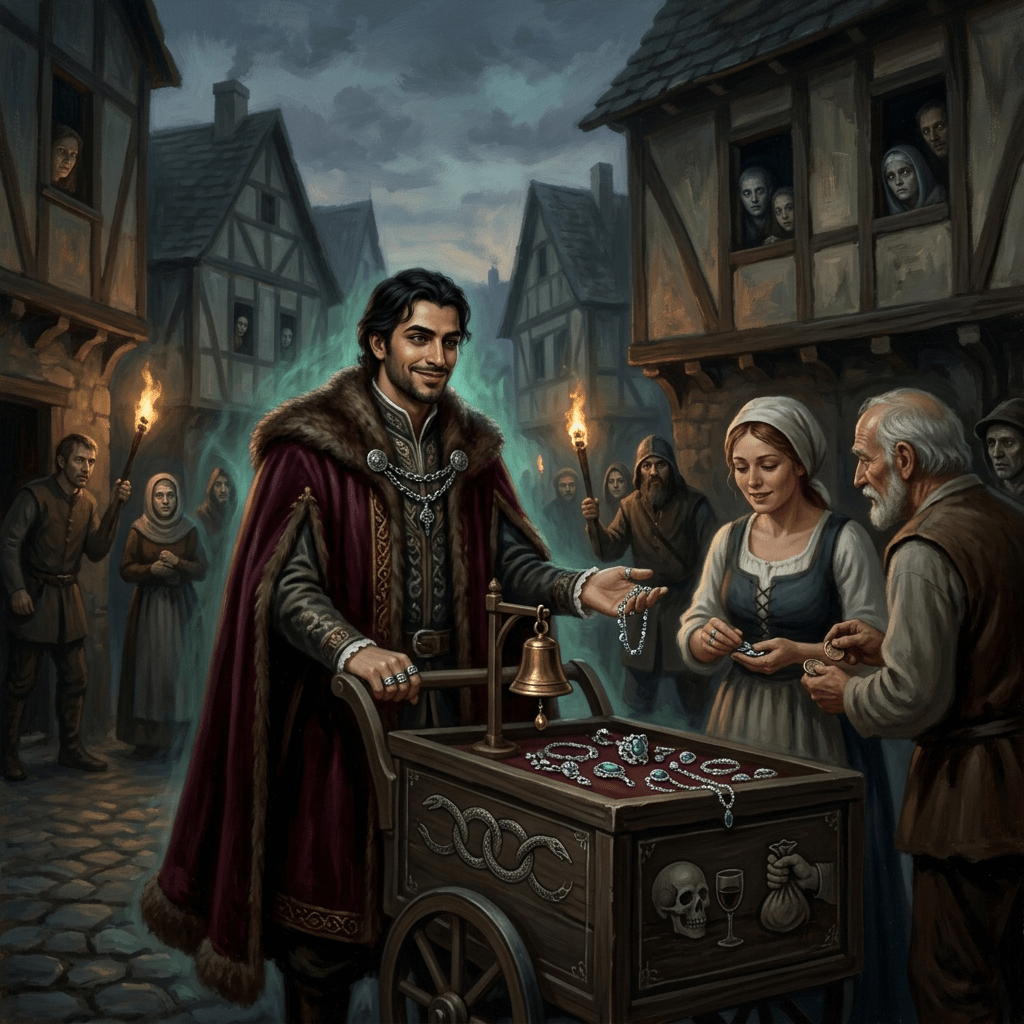
Then they spent the next six months trying to catch a jewelry merchant, name Clyde. He was not possessed by a Rune God, nor a jeweler secretly summoning horrors from beyond the Doomgate. He was just a jeweler, an unpleasant little man who a hand cart with a bell. After that figured out that if he paid them something, they wouldn’t question the value of the rest. This allowed him to seize control of the jewelry trade in an entire village.
The players absolutely hated him. They talked about him constantly. Years later they still remembered his name. Nobody remembered the demon.
I’ve thought about that a lot over the years.
Part of it is simple. Demons are expected. A fantasy world is supposed to have monsters. If you’re wandering around Sundrah and encounter something with too many teeth and glowing eyes, nobody is surprised. That’s Wednesday.
What catches people off guard are the ordinary villains. The people who don’t look like villains at all. Damia has always interested me because of that.
Most of the Rune Gods announce themselves. Gorgos leaves disease behind him. Malakor arrives with an army. Krag usually leaves bodies lying everywhere. You know when they’ve entered the story. You can smell it.
Damia never kicks the door in. He already has a key.
The first time I wrote him, I made the same mistake most people make. I tried to make him sinister. Shadowy meetings. Secret cults. Whispered conspiracies. Then I realized none of that was necessary.
The truly dangerous people are rarely mysterious. Quite often they’re respected, and that’s much worse.
Think about the people who actually know things. Not the heroes. Not the kings. The people who sit quietly in the middle of everything.
You would recruit the people everyone already trusts, or better yet, the people nobody notices.
That’s where Damia became interesting to me. Not as a dark lord, but as a patient man sitting quietly in the corner while everyone else made mistakes.
The other Rune Gods break things. Damia waits for things to break themselves. That’s a very different kind of evil.
The funny thing is that every Game Master eventually discovers this. You can spend weeks designing the Emperor of Eternal Darkness and your players will kill him without hesitation. Then some local official refuses to help them because a permit wasn’t filed correctly and suddenly they’re planning a revolution. Players understand monsters. Everybody understands monsters.
What they don’t understand is why the person causing all the trouble never draws a sword, because by the time the sword comes out, the damage has usually already been done.
Maybe that’s why Damia feels more believable to me now than he did thirty years ago. When I was younger, I thought kingdoms fell because of great wars. The older I get, the more I suspect they fall because too many small people make too many selfish decisions for too many years.
That’s exactly the sort of thing Damia would appreciate. He probably wouldn’t even need a cult.
Just a little encouragement.
Next week we’ll move away from politics and bureaucracy to something much lighter:
Death.
Specifically, why becoming an adventurer in Sundrah may be the single worst career decision available to a sane human being.
If you would like to revisit past articles, look no further than the Geek Opera Index!
Watch the shadows, my friends. And always check your ale for poison.