
Words & Wonders: Campfire and Firesides
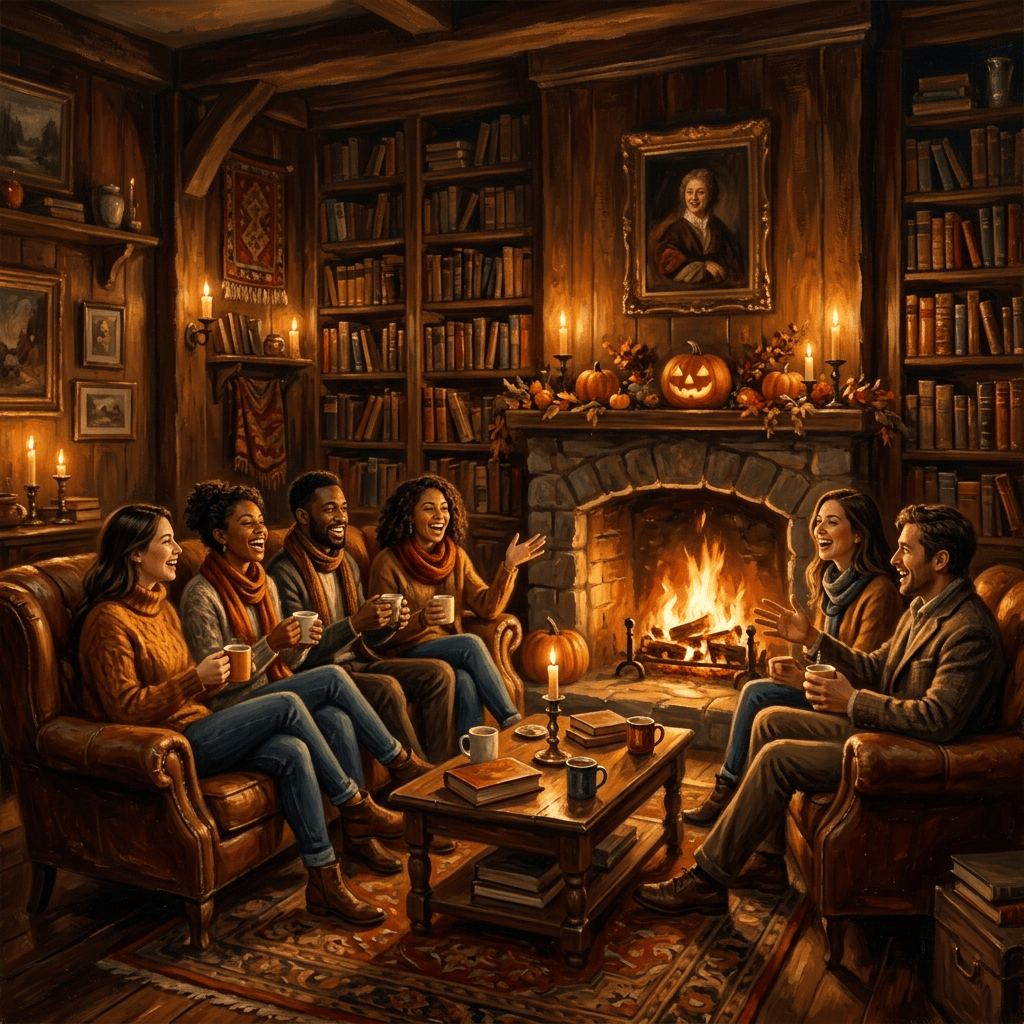
Words and Wonders Wednesday: The Ancient Art of Telling a Good Tale
Come closer, my dear kindlers of the dark. Pull your chair toward the hearth, let the fire mutter its low orange secrets, and lend me your ear for a spell. The season turns, my darlings. The nights grow long and hungry, and there is no finer time to speak of the oldest magic our kind has ever known — the simple, staggering art of telling a good tale.
Tonight we do not gather to hear a story. Tonight we learn to make one live. So let us begin.
A Fire, a Circle, and the First Storyteller
Long before ink, before paper, before a single letter was scratched into clay, there was a fire. And around that fire sat people much like you, wrapped in the dark, waiting.
Storytelling is older than history itself, my sweets — it is history, before history knew its own name. Our distant grandmothers and grandfathers told tales to explain the thunder, to warn of the wolf beyond the light, to remember the dead and honor the brave. The story was how a tribe carried its wisdom forward. It was medicine, map, and warning all at once, passed mouth to ear across countless generations who never wrote a word.
From those fire circles the craft grew and traveled. The bards of old wandered from hall to hall, trading verse for supper. The griots of West Africa held whole lineages in memory, reciting the history of a people from a single seat by the flames. Wandering minstrels, temple priests, grandmothers on porches — each carried the torch a little further down the years. And when at last the printing press came clattering into the world, the story simply found a new house to haunt. Page and stage, radio and screen, the humble game table — the vessel changed, but the fire inside it never once went out.
That is the thread I want you to hold, dear ones. Every novel, every film, every campaign run beneath a swinging lamp descends directly from that first frightened, delighted circle in the dark. We are all still telling stories around the fire. We have merely built grander fires.
The Craft of the Fireside Tale
Now, why does a tale told aloud by a good storyteller sink its teeth so much deeper than the same words read flat and cold? Ah. That, my clever ghouls, is the whole matter. The fireside teller commands a handful of instruments that the careless never think to pick up. Let me name them for you.
The voice. Your voice is the whole orchestra, and most tellers play but a single dull note. Learn to drop it to a whisper so your listeners must lean in — for a crowd that leans in is a crowd already half in your grip. Then, when the moment breaks, let it rise. Warmth for the hearth, ice for the horror. The voice paints the room before a single detail is described.
The pace. A tale is not a race, my darlings. Hurry, and you trample your own best moments. The seasoned teller slows as the dread gathers, stretching each step toward the door until the listeners can hardly bear it — then strikes swift and sudden when the thing at last leaps out. Slow to build. Quick to bite.
The silence. Oh, cherish the silence. It is the sharpest tool in the whole kit, and the one most tellers fear to use. A pause — held one beat longer than feels comfortable — will do more work than a hundred adjectives. Say the words “and then the door opened…” and then simply stop. Let the fire crackle. Let them squirm. In that hush, every listener paints a horror far worse than any you could name aloud.
The atmosphere. Engage every sense, not merely the eye. Let them smell the wet rot of the cellar and the tallow smoke of the candle. Let them feel the cold that has no business in a warm room. A single well-chosen detail — the particular creak of one particular stair — conjures a whole world faster than a page of grand description.
The suspense. Promise the terror long before you deliver it. Show the listeners the locked door in the first breath, and they will fear it through every moment until it opens. Dread is the shadow the monster casts ahead of itself, and that shadow is very often more delicious than the beast.
The connection. Here is the secret beneath all the others, dear ones: watch your audience. The fireside teller reads the faces in the flamelight and bends the tale to fit them. A held breath here, a nervous laugh there — these are your instructions. Speed on when they fidget. Linger when they lean close. A story is not a monologue hurled into the void. It is a conversation, and your listeners are speaking to you all the while, if only you have the wit to listen.
Carrying the Fire to Page and Table
“But sir,” I hear you murmur, “I am a writer at my desk, or a narrator behind a screen. I have no fire, no circle, no faces to read.” Nonsense, my sweet. The instruments are the very same. You need only learn to play them without your voice in the room.
For the writer: Write as though you are speaking the words aloud, and read them back to the empty room to prove it. Your sentence length is your pacing — clip your lines short when the danger crowds in, and let them run long and languid when the dread is only gathering. The white space at the end of a chapter is your silence; use it as ruthlessly as any teller uses a held pause. And trust your reader as the fireside teller trusts the listeners round the flames. Show the locked door. Then have the discipline to walk away and let their imagination do the wicked work you were wise enough to leave undone.
For the game narrator: You, my darling, are the luckiest of all, for you do have the fire and the circle both. You have living faces across the table, breath held over the dice, that shared and crackling dark. Use it as the old tellers did. Drop your voice when your players enter the crypt. Describe the smell of the place before you ever name the horror. And when the door creaks open at last — pause. Say nothing. Let the silence stretch thin as a held breath, and watch your players lean in, spinning terrors for themselves that no manual of monsters could ever match. Read the table as the bard read the hall, and shape the tale to the shiver you see travel round it. That, and nothing less, is storytelling in its purest and most ancient form.
The truth binding all of this together, dear ones, is that the craft has scarcely changed since that first fire. We still whisper to draw them close. We still fall silent to make them afraid. We still promise the monster long before we ever show its face. Master these old fireside instincts, whether you wield a pen or a screen, and you carry a flame that has been burning for uncounted thousands of years — passed hand to hand, teller to teller, all the way down to the little circle gathered at your table tonight.
So kindle it well this season, my clever ghouls. Speak your tales as though the dark itself were listening — for on these long October nights, it very well may be.
For more tricks to sharpen your storytelling and darken your table, keep prowling the workshop with Scaldcrow Games. Tend your fire, tell it true, and mind the shadows it throws.
Until the embers fade — pleasant nightmares.
Want more Gamer? Look no further! Check out our other articles in our blog’s ARTICLE INDEX.
Excellent, just excellent!!!