
Mazes & Mondays: Wings and Wonder
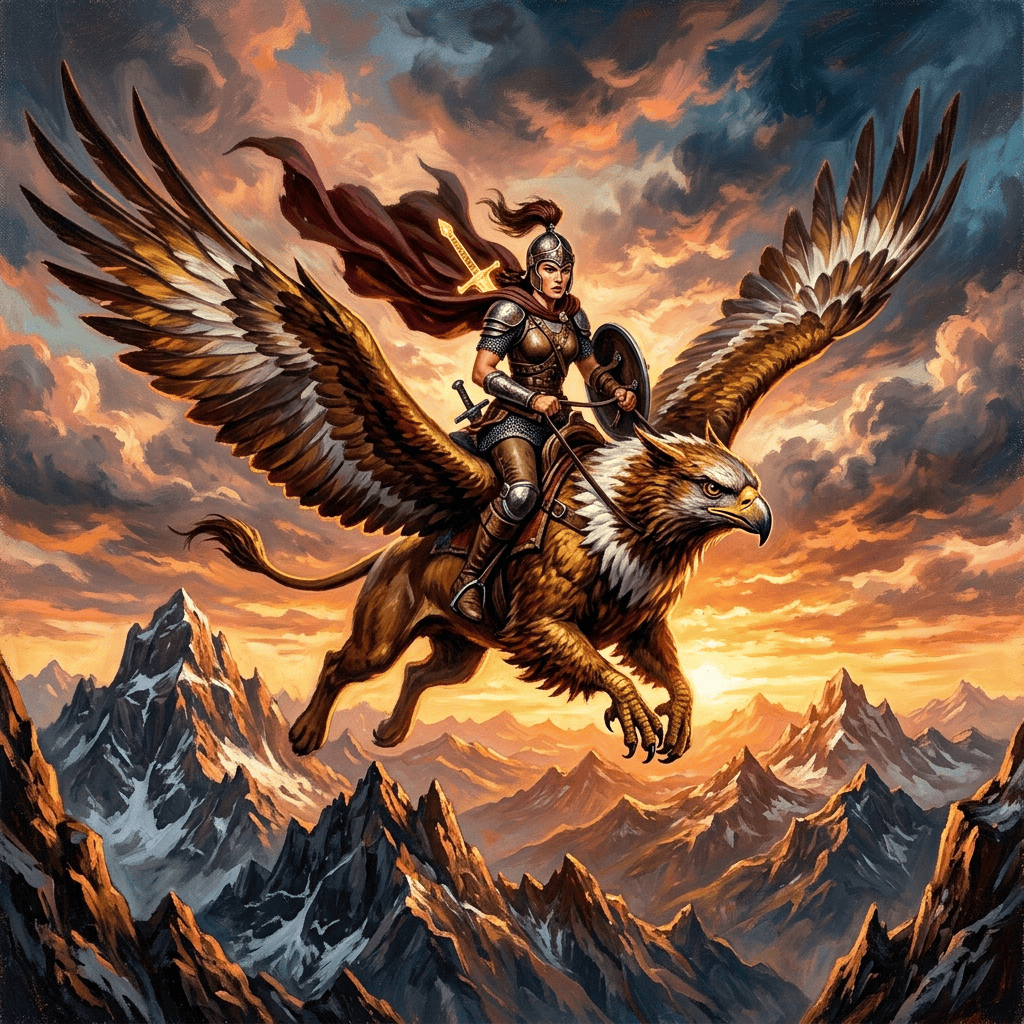
Mazes and Mondays: Wings Over the Table — The Wild Art of Flying Mounts
Pull up a chair. Monday’s here again, and we’re back to poke at the guts of what makes fantasy gaming sing. This week, we’re going up. Way up.
There’s a reason a hero on a griffon’s back has stirred the blood of adventurers since the first pulp magazines hit the newsstands. A sword is a fine thing. A horse, finer still. But a beast with wings? That’s a promise. It says the sky is yours now, and the rules that pin lesser folk to the dirt no longer apply to you. Flying mounts are pure pulp — bold, impossible, and dripping with the kind of romance that makes players lean over the table and whisper, “Wait, I can do what?”
Let’s talk about why they work, how to use them, and how to keep them from wrecking your carefully laid campaign.
The Thrill of the Third Dimension
Most tabletop combat happens on a flat plane. You move, you flank, you find cover behind the overturned cart. It’s a good, honest fight. But the moment you add altitude, the whole map cracks open. Suddenly there’s an above and a below, and every threat has to be measured in three directions instead of two.
That’s the first gift a flying mount gives you: verticality. A dragon-hunter dropping from the clouds. A rogue leaping from a hippogriff onto a fleeing airship. A ranger loosing arrows from a dive so steep her stomach’s still up in the clouds. These are the images pulp fantasy was built on, and they don’t happen on foot.
The second gift is scale. Nothing shrinks a mighty castle faster than seeing it from a thousand feet up. Nothing makes a wilderness feel truly vast like crossing it in an afternoon on wings, watching the forests and rivers scroll past below. A flying mount changes how your players feel the world. It’s the difference between reading about the kingdom and soaring over it.
The Beast Is a Character, Not a Vehicle
Here’s where a lot of tables go wrong. A flying mount gets treated like a magic carpet with a heartbeat — a way to skip the boring parts of the journey. Don’t do that. The griffon, the wyvern, the great storm-eagle: these are creatures with tempers, hungers, and loyalties.
Give the mount a name. Give it moods. Maybe the pegasus won’t fly through lightning, no matter how the player begs. Maybe the giant bat only trusts the one rider and snaps at everyone else. The bond between rider and beast is one of the oldest and best stories we tell, and it earns its keep at the table when the animal has a will of its own.
When the mount is a character, its danger matters. A wounded mount is a genuine crisis. A frightened one is a plot twist mid-flight. Suddenly the sky isn’t a shortcut. It’s a stage.
Tips for the Game Master
Flying mounts break maps, and that’s fine — you just have to plan for it. A few tricks from the workshop:
- Give the sky teeth. Storms, roc-nests, hostile skyships, thin air at great heights. The moment players think the sky is safe, it stops being interesting. Make altitude a gamble, not a freebie.
- Ground them sometimes. Caves, dense canopy, cursed valleys where wings won’t lift — these force players to leave the beast behind and remember what their own two feet can do.
- Use the mount as leverage. Threaten it, capture it, wound it. A villain who knows the heroes love their beasts has a powerful bargaining chip.
- Reward creative flying. When a player wants to use the mount in some wild, cinematic way, say yes and roll for it. That’s the whole point.
Tips for the Players
Riding is a skill, not a given. Lean into it. Learn your mount’s quirks and play them up. Describe the dive, the beat of the wings, the wind screaming past. Don’t just say “I fly over there” — say how, and make your GM grin.
And remember: a flying mount marks you. You’re visible for miles, an easy target for the archer with a keen eye and a grudge. Great power, great silhouette. Use cover. Use clouds. Use the night.
Wings and Wonder
Flying mounts are one of the purest joys in pulp fantasy because they hand your players something they can’t have anywhere else — the sky itself, saddled and waiting. Treat the beast as a companion, make the heavens dangerous, and every flight becomes a scene worth remembering.
So next session, cut your heroes loose from the ground. Let them feel the updraft. Let them ride into the storm.
The greatest stories are the ones not yet told. Tell yours.
If you would like to revisit past articles, look no further than the Geek Opera Index!
Watch the shadows, my friends. And always check your ale for poison.